
5 AI Video Editing Tools That Make Editing Easier in 2026!
____________________________________________________________________________________________
TL;DR
- AI video editing tools use AI to do the slow parts of editing for you - cutting silences, adding captions, finding highlights and resizing for social.
- Need captions, translations or voice-overs? Animaker Subtitles and AI Voice is the quickest fix.
- Editing a podcast or a talking-head video? Descript feels the most natural.
- Got raw footage? Vmaker AI gives you a first draft in minutes.
- Want shorts from a long video? Opus Clip does it fast, but review its picks.
- Want to change a shot without reshooting? Runway can do it, but the credits go quickly.
_____________________________________________________________________________________________
You shot 40 minutes of footage. The final video is four minutes long.
Everything in the editing window is where your week disappears. Cutting the "ums", trimming long pauses, adding captions, and resizing the same video for reels and shorts.
Phew! Just thinking about it is tiring.
That's exactly what AI video editing tools are built to fix.
But here's the problem. There are now dozens of AI video tools, and most of their homepages sound exactly the same.
So we did the research for you. To make it easier, we have shortlisted 5 AI editing tools that are genuinely worth your time.
Here's what this article covers:
- The difference between AI video editors and AI video generators
- A quick comparison table
- The best AI video editing tools in detail
- Final Takeaway
Let’s begin by clarifying a distinction that many people often confuse.
AI video editors vs AI video generators
An AI video editor works on footage you already have, like making the cuts, adding captions, cleaning up audio, and reformatting.
An AI video generator, on the other hand, creates video from scratch, usually from a text prompt or a script.
Both count as AI video tools, but AI video editing tools are built for a more specific job.
Now that we've got the difference out of the way, let's begin with the comparison table for a quick overview.
AI video editing tools comparison
| Tool | Best For | Standout AI feature | Free plan |
|---|---|---|---|
| Animaker Subtitles & Voice | Adding subtitles and voice-overs to finished videos | AI subtitles in 130+ languages and 1,800+ AI voices | Yes - AI voice-overs included, but subtitles need a paid plan. Video exports are watermarked. |
| Descript | Podcasts and talking-head videos | Text-based editing with Underlord | Yes - 1 hour of media a month. Exports are watermarked. |
| Vmaker AI | Raw footage to finished video | One-click auto-edit and AI clip maker | Yes - exports are watermarked. |
| Opus Clip | Turning long videos into shorts | AI clip creation with virality score | Yes - 60 credits a month. Exports are watermarked. |
| Runway | Changing shots with a prompt (generative edits and VFX) | Prompt-based edits to footage you already have | Yes - 125 one-time credits. Exports are watermarked, and Aleph video editing isn't included on the free plan. |
Now, let's take a closer look at each tool one by one.
1. Animaker - Best for captions, translation, and voice-overs
Animaker is primarily an animation software that also has AI-powered editing features like adding subtitles and AI voiceovers.
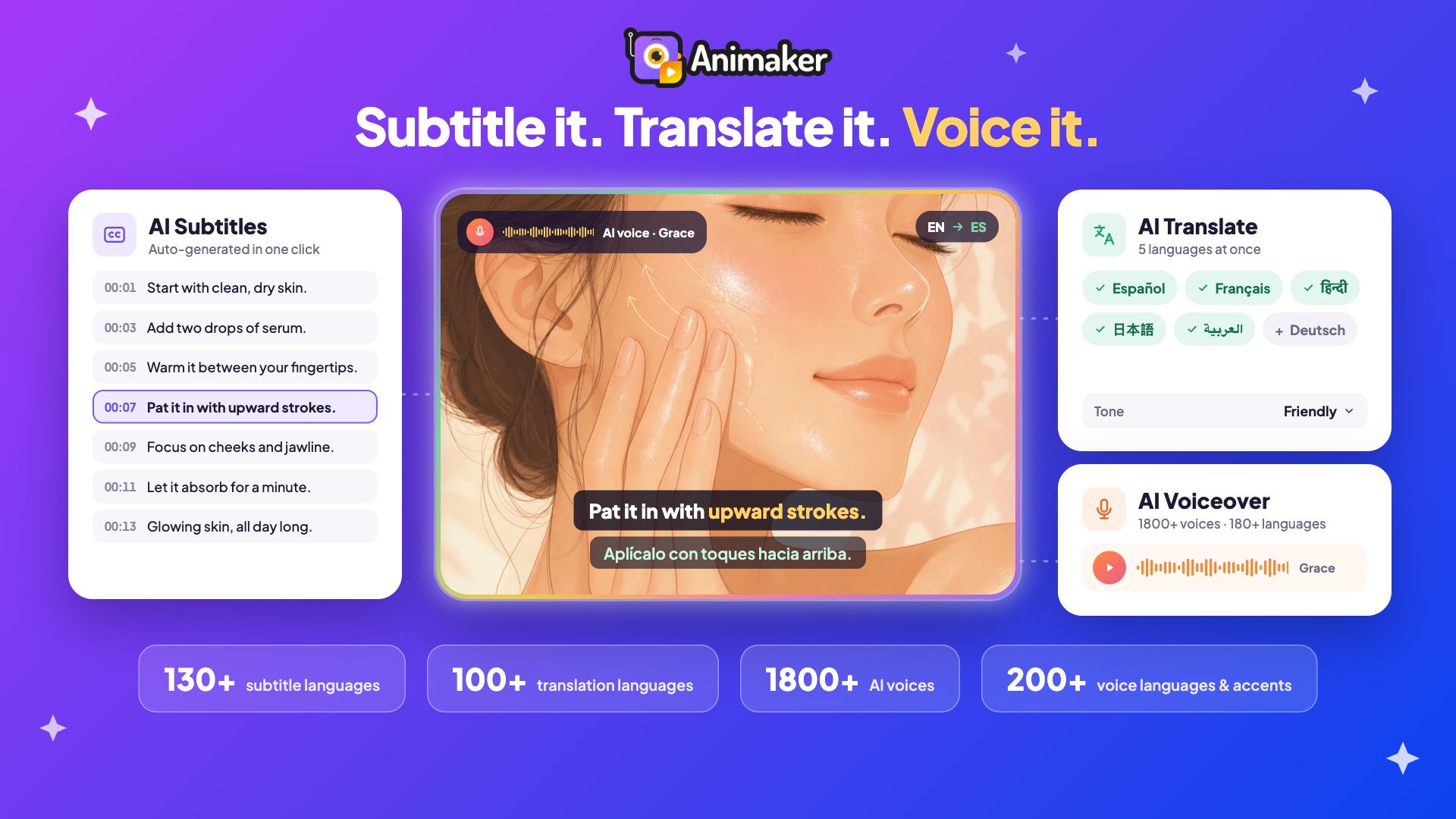
Animaker’s Subtitle Generator offers three ways to add subtitles to your videos - generate them with AI, type them manually, or upload a subtitle file and sync it with your video.
The AI-generated subtitles are 99% accurate and perfectly synced with the video. You also have the flexibility to edit the fonts, colors, add animated styles to the captions, and correct any misspelled names or words.
Animaker’s AI Voice Over turns your text into speech instantly. The tool has 1,800+ AI voices across 200+ languages that sound incredibly human.
Best for?
This tool is best suited for creators, teachers, and marketers who already have a video and want to make it more accessible with subtitles, voiceovers, and more.
What is worth knowing?
While the platform offers a free plan, the auto-subtitle feature is not included and exports come with a watermark. The voiceover feature is available on the free plan, but with limited minutes that reset every month.
For the most up-to-date breakdown of features and plan limits, it’s worth checking the pricing page before you sign up.
Bottom line:
Animaker is the quickest way to make a finished video accessible and global. It is, however, not the tool for cutting footage.
2. Descript - Best for editing video like a document
Descript is an AI video editing tool that uses transcript-based editing. This means that the software edits the video as the user deletes the words from the transcript.
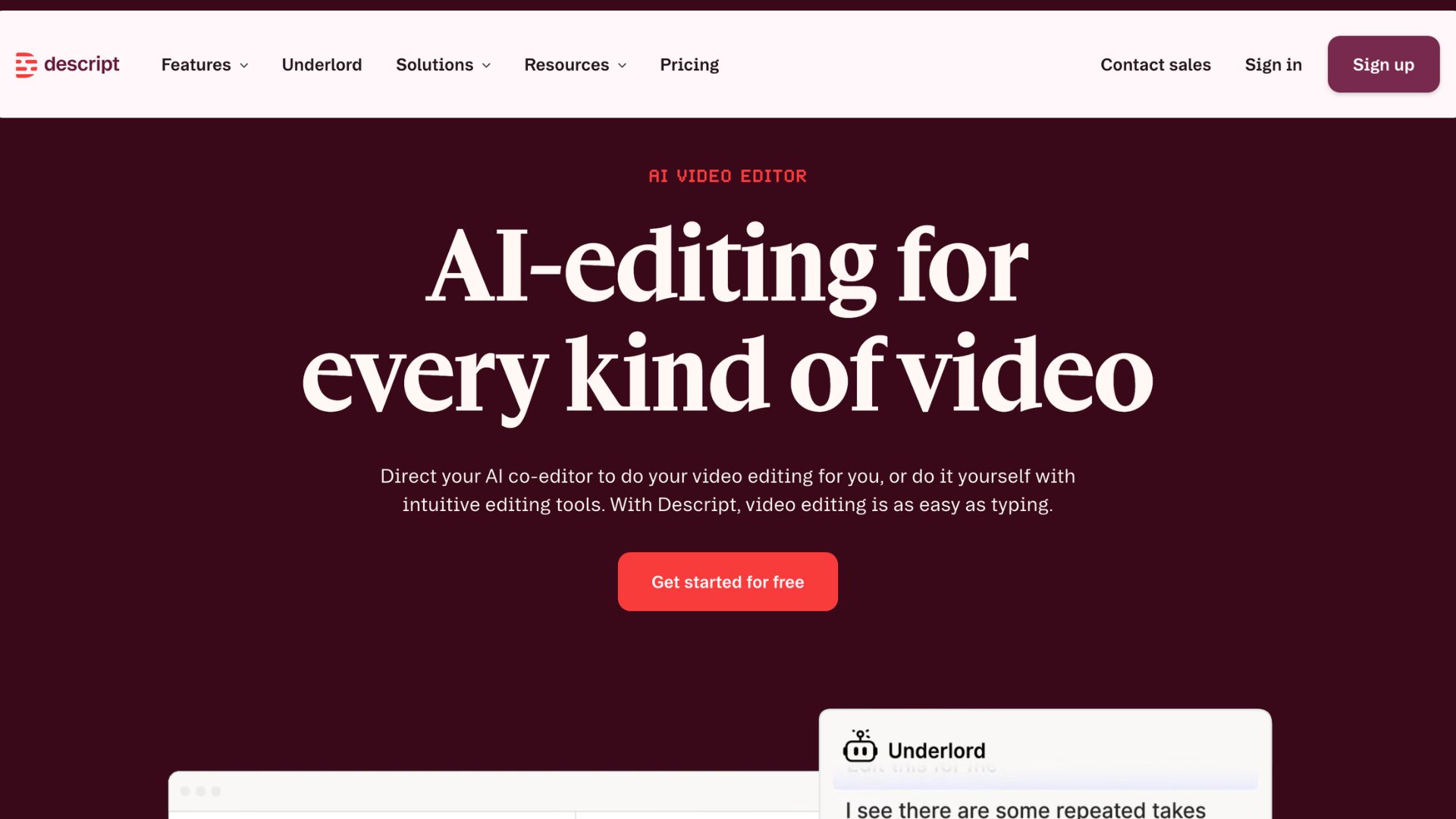
If you delete a particular sentence, that part of the video disappears.
The tool’s text-based editing assistant, called the Underlord, is easy to use for even beginners. Underlord can also remove filler words and clean up audio in a single click.
Best for?
The tool is great for podcasters, interviewers, and talking-head creators.
What is worth knowing?
Descript has a free plan, but it's limited. The credits are used up by AI features like Underlord, not by basic editing. So heavy AI use can drain your allowance faster than you'd expect.
Bottom line:
If your videos are mostly filled with people talking, then this is the most approachable way to edit them.
3. Vmaker AI - Best for adding B-rolls
Vmaker AI takes raw footage and turns it into a publish-ready video. Upload your video, and the AI adds relevant B-roll (extra footage that covers the main video), music, transitions, and subtitles.
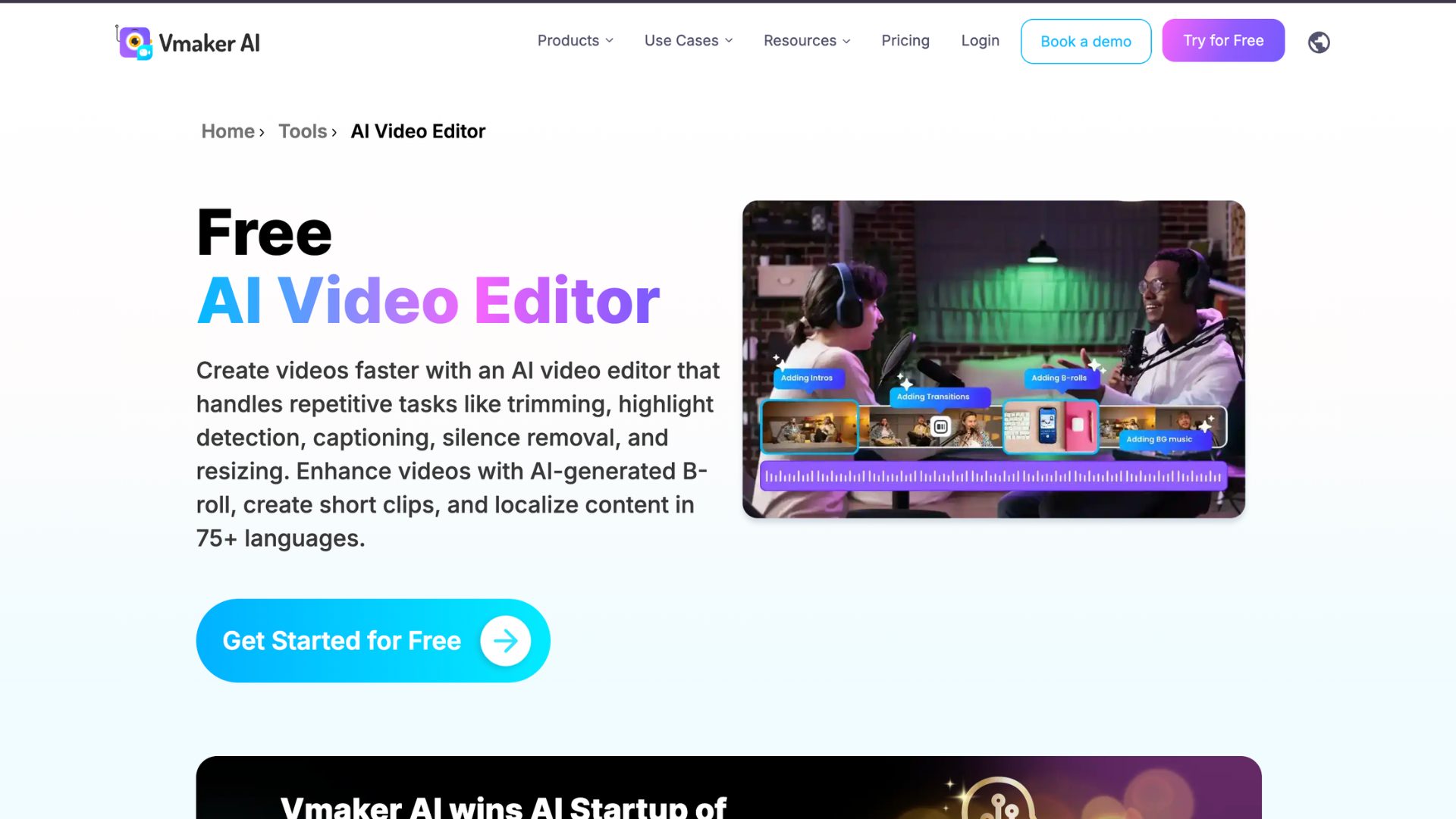
With this full video editing suite, you can cut, trim, resize, merge, flip, rotate, apply filters, add text, enhance audio, correct colors, adjust playback speed, and much more to enhance your video.
Vmaker AI was built on the idea of reducing “Time to Content” for its users.
Best for?
The tool is best for YouTubers, podcasters and marketers with talking-head or screen-recorded videos.
What is worth knowing?
The free plan adds a watermark, so treat it as a test run rather than something you can publish.
Bottom line:
This tool is a good pick if you'd rather let AI do the first pass and fine-tune afterwards.
4. Opus Clip - Best for turning long videos into shorts
Opus Clip analyzes a long uploaded video and picks the moments most likely to work as short clips.
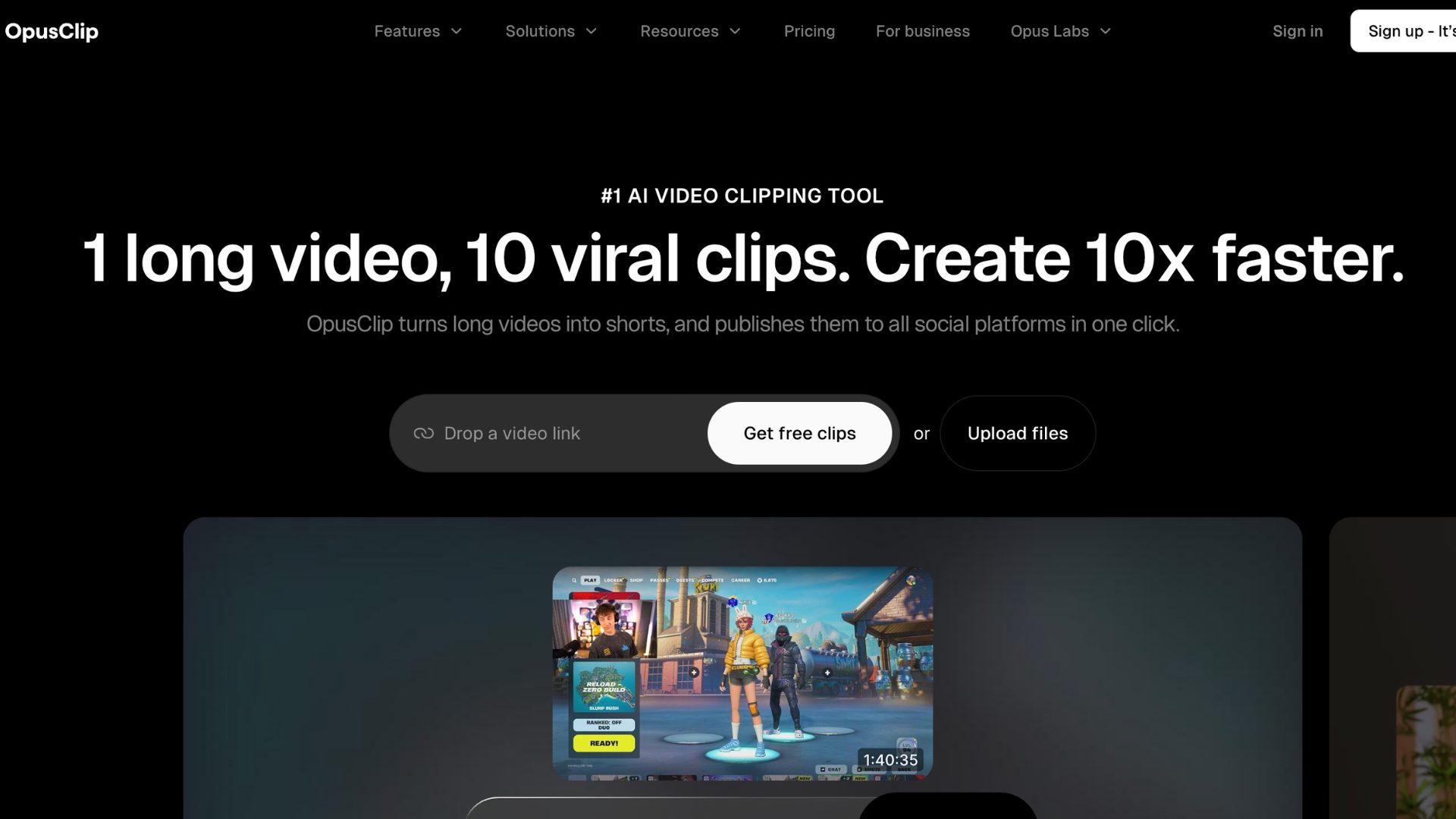
The tool also gives a virality score for each clip generated, so that you know which ones to post. You can add B-roll using its AI feature, and schedule your posts ahead of time with its social scheduler feature.
Best for?
Opus Clip is a must-have for creators and podcasters who repurpose long-form content.
What is worth knowing?
Opus Clip bills by minutes of source video, not by clips you export. The free plan is available, but exports are watermarked and disappear after 3 days.
Bottom line:
If you want to repurpose long-form content into Instagram Reels and YouTube Shorts, it’s a solid pick when you need to create a lot of content quickly. Just don’t post every clip it gives you. Cross-checking is vital.
5. Runway - best for changing shots with a prompt
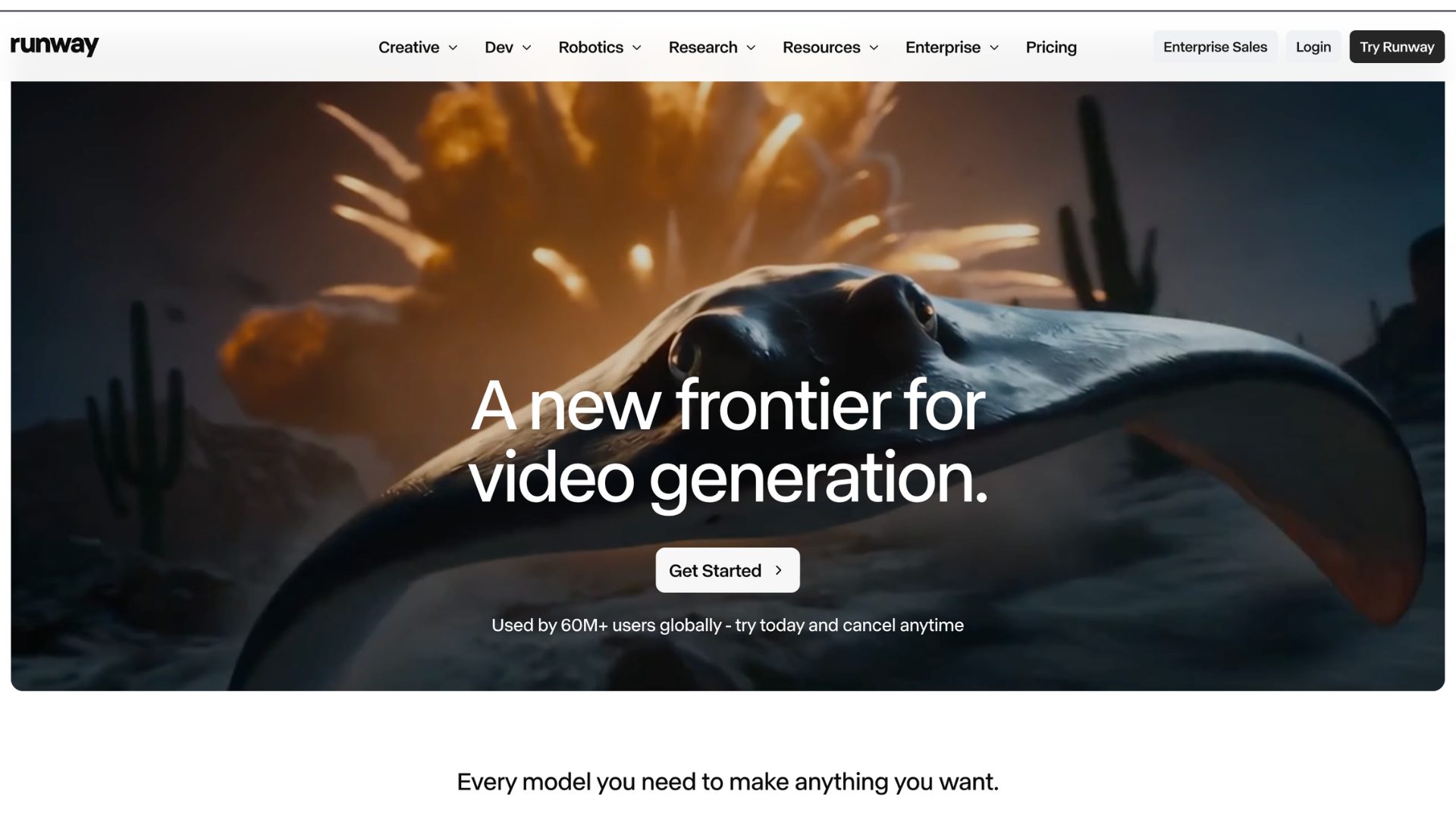
Runway is a generative video platform. Its Aleph model edits footage you already have from a text prompt, rather than generating a shot from nothing.
Best for?
Runway is a solid choice for creative pros, filmmakers, and marketers who want to fix a shot without reshooting.
What is worth knowing?
Runway offers a free plan with limited one-time credits, but the credits exhaust fast. Aleph clips also max out at 30 seconds and 1080p, and it isn't included in the free plan.
Bottom line:
It is an impressive tool but costly. Treat it as a special-effects tool, not an everyday editor.
Final Takeaway
It all comes down to what your goals are. Remember, AI can't replace your ideas or your taste. It just clears the busywork out of the way.
So pick a tool, try the free plan, and make your first video, edited with the help of AI.